Every desk in New York has filed the Philippine peso under emerging market noise. That is the wrong file. The peso is currently the cleanest live readout of an oil shock passing through the balance of payments of a net importer, and the way it gets defended has consequences that land squarely in US rates.
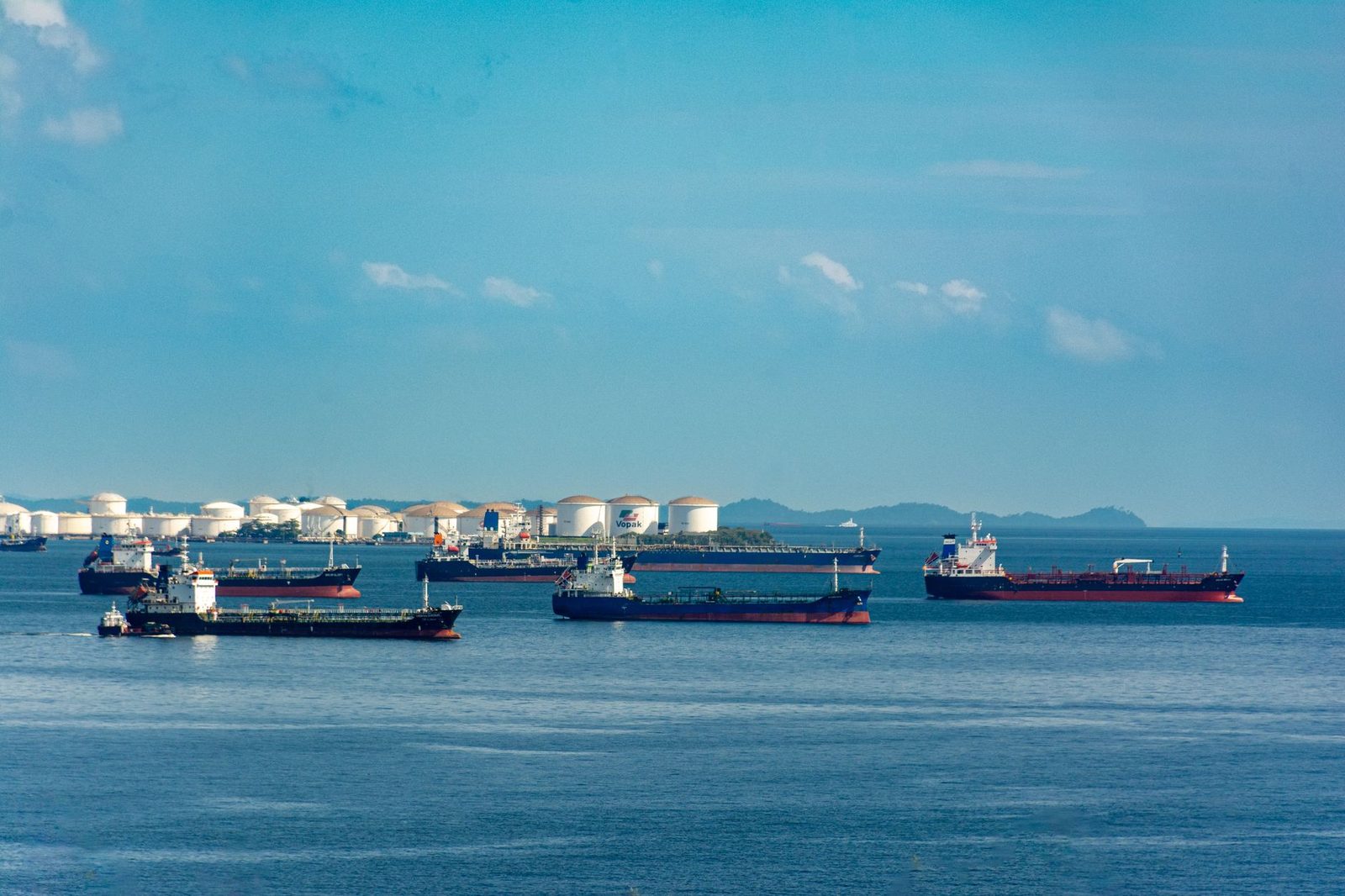
Here is what happened. Bloomberg reported the peso falling to a fresh record low as crude extended its advance, covered here. The prior record was 61.85 per dollar, set on 24 July, which took out the 61.75 level that had held since late April. Traders have been watching 62 as the next line. Behind it sits Brent above $89 on 17 August, with October futures at $89.53 on 12 August, roughly 24 percent above pre-conflict levels, driven by attacks on shipping in the Strait of Hormuz and stalled talks between Washington and Tehran.
The mechanism is an import bill, not a mood
MUFG called the peso the biggest regional loser from the conflict because of the economy's exposure to imported oil. That framing is right and it matters. This is not portfolio outflow. It is a physical bill that has to be settled in dollars, month after month, by importers who do not get to have an opinion on the level. Price-insensitive demand meeting a thin onshore market produces exactly what you are seeing.
Now watch the response. Bangko Sentral ng Pilipinas sold dollars in the onshore market in July, according to traders cited by Bloomberg. Reserves have fallen more than five percent this year. Policy was tightened by a quarter point to 4.5 percent, the first hike in more than two years. Standard Chartered's Jonathan Koh has been clear that the central bank is managing speed and disorder, not defending a number.
He is describing the only sane approach. You cannot defend a currency against a flow you do not control. The oil bill is set in the Strait of Hormuz, not in Manila.
What reserve defence does to US assets
This is where consensus has it backwards. The reflexive trade on an oil shock is dollar strength and a bid for Treasuries as a growth scare. Look at the actual plumbing instead.
Reserves are not dollars in a vault. They are dollar assets: bills, notes, deposits. Selling dollars in the spot market to slow a depreciation generally means drawing those holdings down. One central bank doing this is a rounding error in a $28 trillion market. But India's central bank has been active in spot and forwards, Indonesia and Thailand sit in the same bucket, and the shared cause is one crude price. That converts a set of unrelated domestic decisions into a correlated, price-insensitive seller of US duration, arriving precisely on the days when the oil headline is worst.
The size of these flows is not observable in real time. I will not invent a figure. The direction is what matters, and the direction is that the official sector is on the wrong side of the reflex trade.
The oil shock does not import inflation into the US directly. It imports a seller of duration.
The part almost nobody is pricing
Now the payload. The peso's fall is a cost reduction for American companies, and it is showing up in a line item nobody connects to crude.
The Philippines runs one of the largest offshore services industries in the world. Business process outsourcing and global capability centres employ hundreds of thousands of people whose wages are paid in pesos, delivering work contracted in dollars. Industry body IBPAP has been explicit about global capability centres as the growth engine. When the peso depreciates, the dollar cost of that delivered labour falls mechanically, without a single renegotiation, without a single redundancy.
Read that against the macro backdrop. The same crude price that is raising the energy input cost of a US corporate is simultaneously lowering the dollar cost of its back office, its claims processing, its finance function, its customer support. Energy inflation and services disinflation travelling down the same wire, sourced from the same event.
It is not modelled because it does not sit in one place. The energy cost lands in cost of goods sold and gets discussed on every call. The offshore saving lands in selling, general and administrative expenses, arrives with a contract cycle lag, and gets attributed to operational discipline or automation when it shows up. The FX loss is Asia's. The margin effect is America's. And the accounting hides the connection.
At Zentra Asset Management this is not expressed as a currency position. A market-neutral book has no business being long or short the peso off a news story. It is an input: into how the rates leg behaves on crude spikes, and into which corporate cost structures are quietly being subsidised by an FX move nobody in the West is reading.
What would have to be true for me to be wrong
The counter-case is strong and I take it seriously.
First, Hormuz. Brent fell as low as $69 on 2 July after a memorandum of understanding between the United States and Iran, according to the EIA, then round-tripped toward $90 within six weeks. A credible reopening collapses the risk premium fast, and the peso story goes with it. This is a two-way market and the level of crude is a political variable, not a fundamental one.
Second, the reserve channel may be far smaller than the argument requires. If intervention stays targeted, as Standard Chartered expects, drawdowns are modest and the duration effect is noise against the size of the Treasury market.
Third, the offshore cost channel is slower and stickier than a spot chart suggests. Contracts are hedged, priced in dollars, and repriced annually. Providers keep much of the FX gain rather than passing it through. The effect may be real and still be too small and too lagged to matter to a margin line.
Fourth, peso weakness raises the local value of remittances and services receipts, which cushions domestic demand and partly self-corrects the pressure.
What I am watching
Whether the BSP defends 62 as a level or continues to manage only the speed. The monthly reserve prints, which are the honest scorecard for how much defence actually costs. Hormuz transit counts, which lead the crude price rather than follow it. And most of all, the correlation between crude and the long end of the US curve on risk-off days. If oil rises and 30 year yields rise with it, the official sector selling channel is live and the growth-scare framing is dead.
One question. When your macro model says an oil shock is disinflationary for the US through demand destruction, does it have a line anywhere for the fact that the same shock just made half of corporate America's offshore workforce five percent cheaper?
Komey Tetteh writes on macro events and how they transmit into positioning in US markets. This is general information and commentary only. It is not financial advice and no recommendation to buy or sell any security is intended.
Common questions
Why is the Philippine peso falling when oil prices rise
The Philippines is a net oil importer, so a higher crude price directly widens its energy import bill and forces domestic importers to buy more dollars in the onshore market. MUFG Bank has described the peso as the biggest regional loser from the Middle East conflict precisely because of the economy's high exposure to imported oil. Bloomberg reported the peso reaching a record low of 61.85 per dollar on 24 July 2026, passing the previous all time low of 61.75 that had held since late April. The relationship is a balance of payments flow, not a sentiment trade.
Has the Philippine central bank intervened to support the peso
Yes. Traders familiar with the matter told Bloomberg that Bangko Sentral ng Pilipinas sold dollars in the onshore market in July 2026, joining India in defending a currency hit by rising crude. The country's reserves have fallen more than five percent this year. Standard Chartered analyst Jonathan Koh has said the BSP is likely to focus on the speed and disorderliness of moves rather than defend a specific exchange rate level, and that intervention is targeted rather than an attempt to reverse the trend.
How high is Brent crude right now and why
Brent traded above $89 a barrel on 17 August 2026, with October futures quoted at $89.53 on 12 August, roughly 24 percent above levels seen before the conflict began. The move reflects attacks on vessels in the Strait of Hormuz and stalled negotiations between Washington and Tehran. The US Energy Information Administration noted in its August Short Term Energy Outlook that Brent had fallen as low as $69 on 2 July after a June memorandum of understanding, before renewed tanker attacks reversed the decline.
Does foreign exchange intervention by Asian central banks affect US Treasuries
Foreign exchange reserves are held largely in dollar assets including Treasury bills and notes, so selling dollars in the spot market generally involves drawing down those holdings. When several oil importing central banks defend their currencies at the same time, the official sector becomes a distributed source of supply in US government debt rather than a buyer. The size and timing of these flows are not observable in real time and are only visible later in reserve and custody data, so the direction matters more than any single figure.
Which Asian currencies are weakest against the dollar in 2026
The Indian rupee, Indonesian rupiah and Philippine peso have all ranked among the region's worst performers since the outbreak of conflict in the Middle East, reflecting heavy reliance on imported energy. The rupee reached a record low near 95.8 per dollar in May 2026, having depreciated more than 6.5 percent since the start of the year. Bloomberg reported the peso down about five percent for the year as of late July. MUFG has flagged the Thai baht as another currency under pressure from the same channel.
What does a weaker peso mean for companies that outsource work to the Philippines
Wages in the Philippine business process outsourcing sector are paid in pesos while much of the revenue is contracted in dollars, so a depreciating peso mechanically reduces the dollar cost of the same delivered work. The pass through to client companies depends on contract structure, hedging policy and renewal cycles, and providers frequently retain part of the benefit rather than passing it on immediately. Industry body IBPAP has publicly pointed to global capability centres as central to the country's position as an information technology and business process hub.
Research that reaches you before the narrative does
One note each week connecting a global event to positioning in US markets. No paywall.
Subscribe free