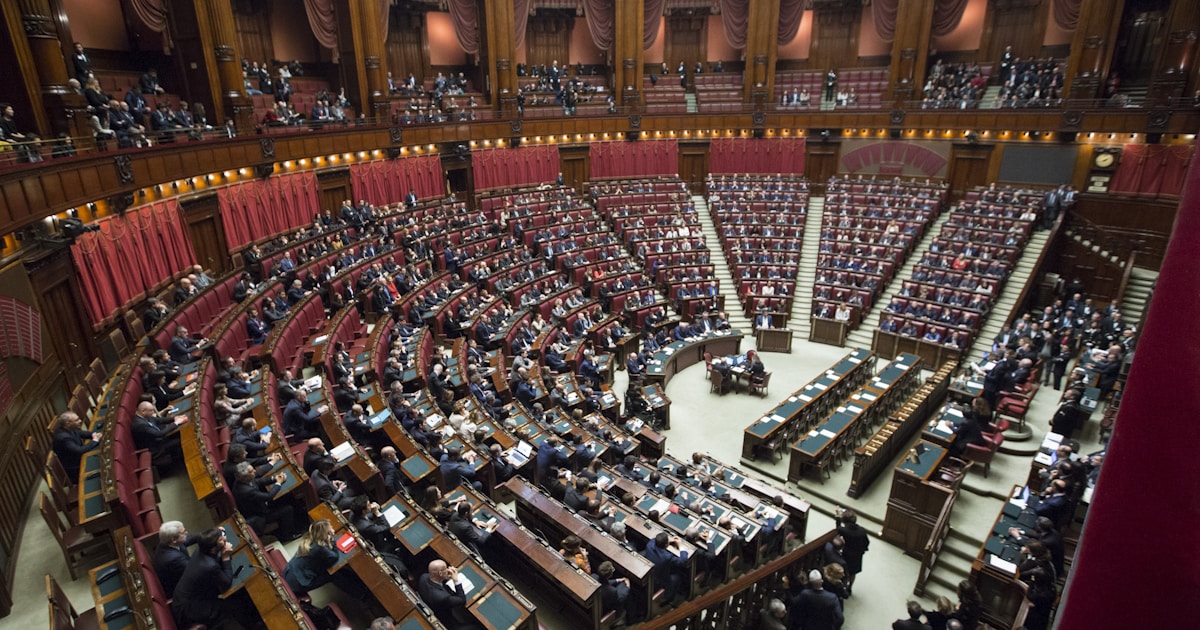
Kosovo is once again navigating a constitutional deadlock after parliament failed to elect a president, triggering the conditions for yet another snap election in one of Europe's youngest and most fragile democracies. On the surface, this looks like a domestic political story confined to a small, landlocked territory in the Western Balkans. Look closer, and the implications stretch considerably further. Kosovo sits at the intersection of EU enlargement ambitions, NATO's southeastern flank management, Serbian geopolitical maneuvering, and Russian influence operations across the region. Each cycle of political instability delays EU integration timelines, frustrates foreign direct investment, and adds a small but meaningful increment to the broader Balkans risk premium that institutional investors have spent years trying to quantify. For macro strategists tracking frontier and emerging Europe, this is not background noise. It is a signal worth pricing.
Why Kosovo Political Deadlock Is a Structural Story, Not a One Off
Kosovo has held multiple snap elections since declaring independence in 2008, and each cycle reveals the same structural fracture: a fragmented parliament where ethnic Albanian parties, Serbian minority blocs, and diaspora-linked movements cannot sustain governing coalitions long enough to complete basic constitutional procedures. Electing a president requires a two-thirds parliamentary majority, a threshold designed for consensus but routinely weaponised for obstruction. The result is a governance vacuum that compounds investor hesitation.
For context, Kosovo remains one of the poorest economies in Europe, with GDP per capita around 5,400 USD purchasing power parity adjusted and unemployment stubbornly above 25 percent among youth cohorts. Political uncertainty directly depresses the private sector investment that any credible development path requires. Each failed election cycle is, in economic terms, a compounding drag on potential output that no structural reform package can fully offset while the political ceiling remains this low.
International partners, including the EU, the United States, and the IMF, have all conditioned financial support and integration pathways on demonstrable governance stability. Another snap election effectively resets the clock on those conditionality frameworks, delaying disbursements and softening the credibility of Kosovo's reform commitments in the eyes of multilateral lenders.
Every Kosovo snap election is not just a democratic reset. It is a compounding discount applied to EU integration timelines, FDI inflows, energy transition financing, and NATO operational planning across the entire Western Balkans corridor.
The Serbia Dimension and Its Regional Contagion Risk
Kosovo's political instability cannot be read in isolation from Serbia's strategic posture. Belgrade has never recognised Kosovan independence and continues to lobby actively against its recognition by United Nations member states. Serbian political actors maintain influence over the Srpska Lista party, the dominant voice for Kosovo's Serbian minority bloc, which consistently plays a spoiler role in coalition building. This dynamic is not accidental. It is a deliberate instrument of soft-power pressure that Serbia deploys to keep Kosovo institutionally weak.
From a macro perspective, this Serbia-Kosovo friction is a persistent headwind for the entire Western Balkans investment corridor. Foreign direct investment into the region, which totalled approximately 7.8 billion USD in 2023 across Albania, Bosnia, Kosovo, North Macedonia, Montenegro, and Serbia combined, is highly sensitive to bilateral tension escalation. Supply chain investors considering nearshoring into lower-cost European adjacency markets consistently cite political risk as a primary deterrent, and the Kosovo-Serbia standoff is the single most frequently mentioned specific concern.
Any deterioration in the EU-facilitated Belgrade-Pristina dialogue, which has been stalled since 2023, risks triggering a broader reassessment of Western Balkans sovereign spreads and could put upward pressure on Croatian and Slovenian credit default swaps as proxy instruments for regional contagion.
EU Enlargement Stall and What It Means for European Cohesion Funds
The EU enlargement process for the Western Balkans has been effectively frozen for years, and Kosovo's recurring political crises are a primary justification Brussels uses internally for maintaining that freeze. Kosovo does not yet have full EU candidate status, partly because five EU member states still do not recognise its independence. Each snap election reinforces the narrative among enlargement skeptics within the European Council that the Western Balkans are not ready for deeper integration, which in turn delays the pre-accession financial instruments that would materially improve Kosovo's fiscal position.
The EU's instrument for pre-accession assistance, known as IPA III, allocates approximately 14.2 billion EUR across the 2021 to 2027 multiannual financial framework for the Western Balkans and Turkey combined. Kosovo's share is conditional on reform benchmarks that are impossible to meet without a functioning government. Political deadlock therefore has a direct fiscal transmission mechanism: delayed IPA disbursements widen Kosovo's fiscal gap, increase reliance on diaspora remittances, which represent roughly 17 percent of GDP, and constrain public investment in infrastructure and energy transition.
For European equity investors, the enlargement stall has sector-level implications. Construction, utilities, and telecommunications companies with Western Balkans exposure, particularly those from Austria, Germany, and Hungary, carry embedded political risk in their regional earnings that consensus models tend to underweight during periods of apparent calm.
NATO Flank Management and the Defence Spending Ripple
Kosovo hosts Camp Bondsteel, one of the largest US military installations in Europe, and KFOR, the NATO-led peacekeeping force that has maintained a presence since 1999. Political instability in Pristina creates operational complications for NATO's southeastern flank management at precisely the moment the alliance is stretched across multiple theatres. A governance vacuum in Kosovo increases the risk of interethnic incidents that could require KFOR escalation, drawing alliance resources and political attention away from other priorities.
For macro strategists, this has a defence spending dimension. NATO members in the region, particularly Albania, Montenegro, and North Macedonia, all of which border Kosovo or have direct security interests in its stability, face implicit pressure to increase defence allocations when Kosovo's political situation deteriorates. Albania already committed to exceeding the NATO 2 percent GDP defence spending target. North Macedonia accelerated its defence modernisation programme following recent Balkans tension cycles. These spending increases, while modest in absolute terms, represent a fiscal impulse that flows into defence procurement supply chains dominated by US and European contractors.
Lockheed Martin, Rheinmetall, and Leonardo all have active procurement relationships with Balkans NATO members. A sustained destabilisation cycle in Kosovo is, counterintuitively, a modest positive catalyst for regional defence contract pipelines.
Energy Infrastructure Investment and the Green Transition Delay
Kosovo is one of the most coal-dependent economies in Europe, with the lignite-fired Kosova A and Kosova B power plants supplying the vast majority of domestic electricity. The EU and World Bank have conditioned energy transition financing on governance milestones that require a functioning government to negotiate, ratify, and implement. Another snap election pushes back Kosovo's legally binding commitment to close its aging coal plants, a commitment that was already one of the most contentious elements of its energy community obligations.
This delay has upstream implications for the green energy investment pipeline. Several European renewable energy developers, including Austrian and German-backed consortia, have been in advanced discussions about utility-scale solar and wind projects in Kosovo. Political uncertainty freezes these conversations. Given that Kosovo has some of the highest solar irradiance levels in the Balkans and relatively low land acquisition costs, the opportunity cost of governance-driven delay is measurable in gigawatts of clean capacity that the region needs to meet its own energy security targets following the Russia-Ukraine supply shock.
For fixed income investors, the coal closure delay also creates a stranded asset liability on Kosovo's sovereign balance sheet that complicates any future Eurobond issuance. International capital markets would require a credible energy transition pathway before pricing a Kosovan sovereign instrument at investment-grade adjacent levels, and that pathway requires political continuity that snap elections structurally prevent.
This is how we position at Zentra Asset Management
Delta-neutral strategies that profit from volatility, not direction. See our full track record and research library.
Access Zentra Asset Management →Kosovo's snap election cycle is a case study in how political dysfunction in small frontier economies creates macro externalities that travel far beyond their borders. The transmission channels are multiple and reinforcing: delayed EU accession financing tightens fiscal space, stalled Belgrade-Pristina dialogue elevates regional risk premia, governance vacuums freeze energy transition investment, and NATO operational complexity increases defence procurement spending across allied neighbours. For portfolio managers, the direct tradeable instruments remain thin given Kosovo's lack of sovereign bond issuance and listed equity markets. The alpha opportunity lies in understanding how this instability is being systematically mispriced in Austrian bank exposures to the region, Western Balkans-linked infrastructure equity, and the defence sector supply chains that quietly benefit when southeastern Europe's security environment deteriorates. Frontier instability rarely stays frontier for long.