Fewer exercises is not less risk. It is the same risk with a quieter volatility signature, and those are two completely different things to hold in a portfolio.
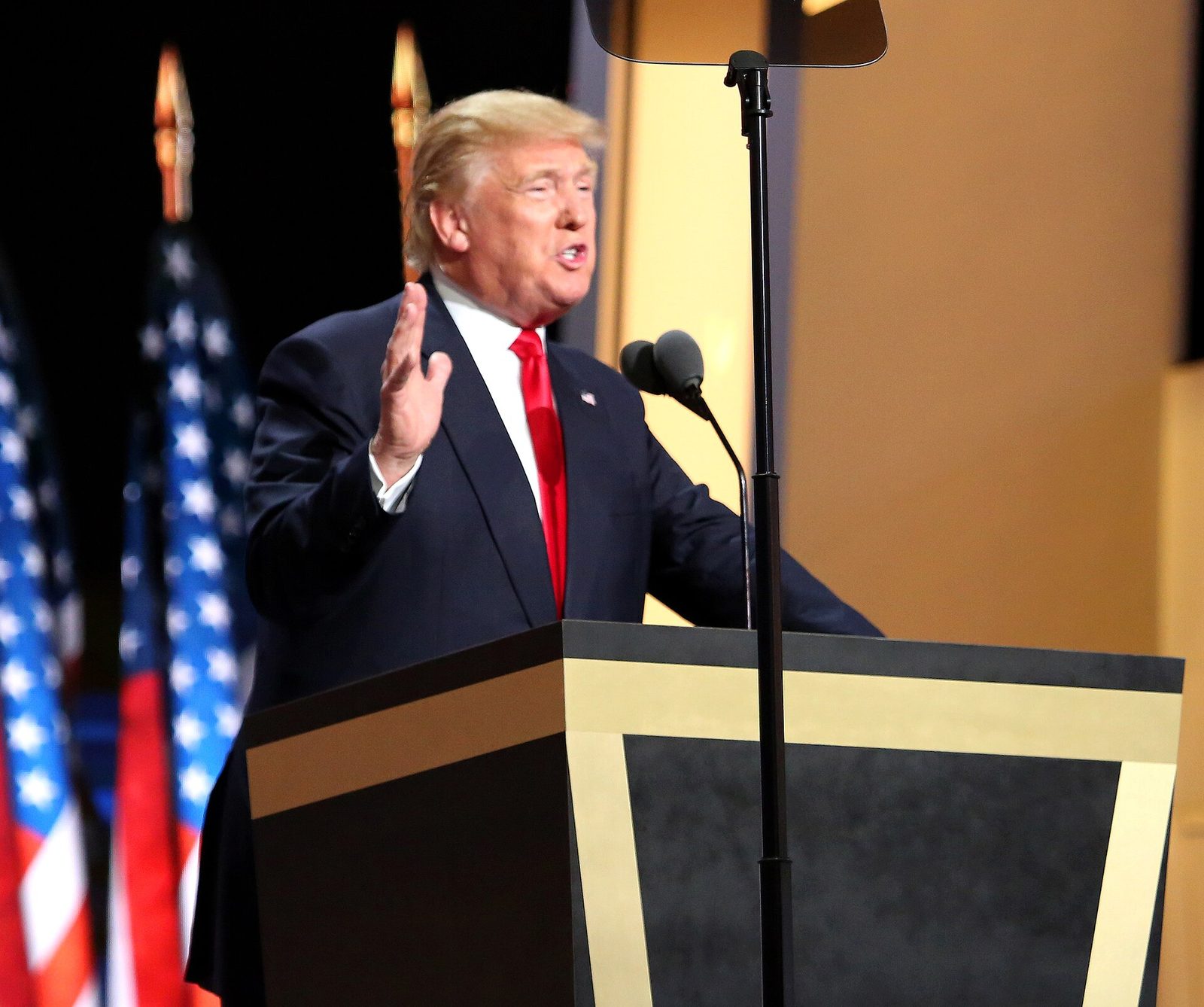
Bloomberg reported that President Trump said he had asked the Pentagon to scale back joint military drills with South Korea, framed around cost and around tone toward Pyongyang (Bloomberg, 16 August 2026). The immediate read across the wires was detente. Calmer peninsula, thinner risk premium, one less thing to worry about in August.
Consensus is reading the wrong instrument entirely.
What an exercise actually is
A combined exercise is not theatre. It is the maintenance schedule for interoperability between two command structures that would have to function as one under pressure. Communications, logistics, sequencing, the unglamorous plumbing of a joint command. Capability of that kind is perishable. It decays without repetition, and the decay is invisible for a long time before it is suddenly not.
Markets cannot observe decay. Markets observe tone. So the price moves on tone, and the tone right now is calm.
Nothing in the reported decision touches the two things that carry the actual deterrent: roughly 28,500 US personnel stationed in the country, and the extended nuclear guarantee that sits behind them. That is precisely why the drill calendar is such a useful negotiating chip. It is cheap to move and it is loud.
The transmission is currency first
Anyone who has traded Korean peninsula headlines knows the sequence. It is not the equity index that moves first. It is the won.
Foreign ownership of Korean equities is among the highest in Asia and that exposure is overwhelmingly currency hedged, which makes the FX leg the fastest expression of any change in perceived alliance risk. The KOSPI follows. Korean treasury bonds follow after that. If you are watching the equity screen for your signal, you are watching the third instrument to react.
And you cannot separate the drills from the money. The 2025 trade framework put a 15 percent tariff line on Korean goods alongside a $350 billion investment commitment from Seoul, and the cost sharing agreement covering the US presence has been renegotiated upward more than once. Exercises, tariffs, investment pledges and troop costs are not four conversations. They are one conversation with four line items, and one of the line items just moved.
The payload nobody is pricing
Here is the part that does not fit in a headline. When Washington reduces the visible operating rhythm of an alliance, the ally does not book a saving. The ally buys its own capability.
That reflex is already underway across Asia for reasons that have nothing to do with this week. This accelerates it. Seoul revisits operational control, indigenous strike capability and, in the loudest corners of its domestic politics, the latency debate that respectable people used to refuse to have out loud. Tokyo watches Seoul and draws the identical conclusion about the reliability of guarantees.
Procurement is a multi year capital commitment. Nobody funds it out of current taxation. It is issued, and it is issued long.
So the terminal instrument in this chain is not Korean equity. It is the long end of the Japanese and Korean government bond curves. Japan's thirty year has already been one of the sharpest repricings in global fixed income, and Japan's long end is not a domestic instrument. It is the reservation price for the largest pool of price insensitive cross border capital in the world. When domestic duration pays enough at home, the marginal Japanese buyer of foreign bonds stops being a buyer.
That is how a change to an exercise calendar in Korea ends up inside the US term premium. Not this month. But the mechanism is real, it is slow, and it is not in any price today.
The chokepoint everyone forgot
The second unpriced item is sitting inside every AI portfolio on earth.
The semiconductor concentration risk that gets discussed is Taiwan and advanced logic. Fine. But high bandwidth memory, the component bolted to every AI accelerator that matters, comes overwhelmingly from two companies on the Korean peninsula. Every hedge, every scenario deck, every risk committee slide points at the Taiwan Strait. Almost none of them price Korea as anything other than a constant.
The most underpriced assumption in the AI complex is not fab capacity. It is the belief that the Korean security arrangement is furniture.
Where the mispricing actually lives
Detente phases compress realised volatility. They do not compress the tail. Sellers of short dated protection get paid handsomely for calm while the distribution quietly grows a longer left leg, and the two effects are measured by completely different numbers.
So the interesting question is not whether Korean assets go up or down. At Zentra Asset Management a market-neutral book has no business holding that view. The question is whether the shape of the distribution is priced correctly relative to the level, and whether protection on Asian equity proxies is cheap relative to the same protection on US indices given who actually owns the underlying supply chain.
What would make me wrong
A great deal, and I want to be honest about the weight of it.
Exercises have been trimmed before. They were suspended and renamed during the 2018 and 2019 diplomatic window, then scaled down again through the pandemic, and the alliance persisted while markets forgot inside a fortnight. The base rate for this mattering is genuinely poor.
Second, Asian long end yields are driven overwhelmingly by Bank of Japan normalisation and by domestic fiscal politics. Hanging a duration story on a Korea headline risks fitting a narrative to a chart that was already moving.
Third, and most seriously, a real detente is a live possibility rather than a rhetorical one. If the geopolitical component of the Korea discount genuinely compresses, foreign flows return, the currency firms, and the entire chain I have laid out is wrong in sign rather than in magnitude. That outcome deserves respect, not a dismissive clause.
What I am watching
Whether the won leads or lags the index on the next alliance headline, which tells you whether cross border capital is repricing or just reacting. The autumn budget cycle in Seoul and Tokyo, where any acceleration in procurement becomes a number rather than a sentiment. The language from Seoul on operational control and independent capability, because that is where the fiscal decision announces itself first. Foreign net flows into Korean equities. And the relative skew on Korea and Japan equity proxies against the S and P complex.
I am Komey Tetteh, and the figure I care about is not how many exercises get cancelled. It is the point at which an ally starts funding its own deterrent, because that is the moment this stops being a diplomacy story and becomes a bond market story.
Your AI exposure has a Korean address whether you underwrote it or not. Do you know what assumption you are carrying, and who priced it for you?
General information and market commentary only. Not financial advice, and not a recommendation regarding any security.
Common questions
Why did Trump say he asked the Pentagon to cut military drills with South Korea
Bloomberg reported in August 2026 that President Trump said he had asked the Pentagon to reduce joint military exercises with South Korea, framing it around cost and around tone toward North Korea. Large scale allied exercises have been used as a diplomatic signal before, most visibly in 2018 and 2019 when drills were suspended or renamed during talks with Pyongyang. The stated rationale and the actual scope of any reduction are separate questions, and the second one usually takes months to become clear.
How do US Korea military exercises affect financial markets
Joint exercises are the maintenance schedule for interoperability between the US and South Korean commands, so changes to them are read as a signal about the depth of the alliance rather than as an event in themselves. In practice the first market instrument to move on Korean peninsula headlines is the won, because foreign ownership of Korean equities is large and typically currency hedged. Equity indices and Korean government bonds tend to react afterwards, and the effect historically fades quickly unless the policy change proves durable.
What is the Korea discount and does geopolitics cause it
The Korea discount refers to the persistently lower valuation multiples applied to Korean listed companies relative to regional and global peers. Analysts generally attribute it to a mix of corporate governance and minority shareholder treatment, chaebol ownership structures, and a standing geopolitical risk premium from the division of the peninsula. Because several causes overlap, isolating how much of the discount is geopolitical is contested, and headlines about the alliance move sentiment more reliably than they move the underlying structural drivers.
Why does allied defence spending show up in bond markets
Military procurement is a multi year capital commitment, and in most advanced economies it is financed by government borrowing rather than by immediate tax increases. That means a sustained rise in defence budgets lands on the sovereign bond curve, usually at the longer maturities where new issuance is concentrated. Japan and Korea both fund through deep domestic bond markets, so shifts in their fiscal trajectory are visible in long dated Japanese government bonds and Korean treasury bonds before they are visible anywhere else.
Is South Korea important to the AI and semiconductor supply chain
Yes. South Korea is home to Samsung Electronics and SK Hynix, which together account for the dominant share of global DRAM production and of high bandwidth memory, the component that sits alongside advanced GPUs in AI accelerators. Discussion of semiconductor concentration risk usually centres on Taiwan and advanced logic fabrication, but memory supply is similarly concentrated on the Korean peninsula. Any assessment of AI hardware supply chain fragility that stops at Taiwan is looking at one of the two chokepoints.
Does lower realised volatility mean lower risk in geopolitical markets
No. Realised volatility measures how much prices have actually moved over a past window, while tail risk describes the size and probability of a rare severe outcome. Periods of diplomatic calm can compress realised volatility while leaving the underlying structural risk unchanged, which is why options practitioners look at the skew and the price of far out of the money protection separately from the level of implied volatility. The two can and often do move in opposite directions.
Research that reaches you before the narrative does
One note each week connecting a global event to positioning in US markets. No paywall.
Subscribe free