
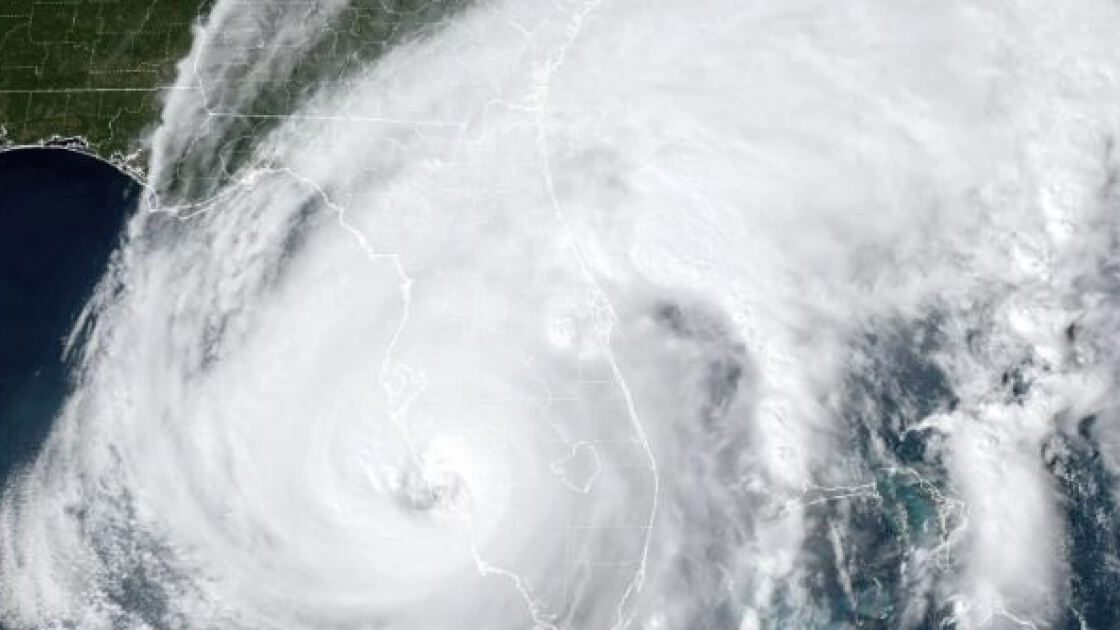
Every hurricane season, a familiar narrative circulates through insurance boardrooms, municipal bond desks, and coastal property markets: a strong El Niño will suppress Atlantic storm activity, reducing catastrophic loss risk and giving the industry a softer year to rebuild reserves. That narrative just cracked. Climate scientists are now making clear that El Niño's hurricane-suppressing effect is not uniform, not guaranteed, and critically, does not extend reliably to Southwest Florida, one of the most densely insured and financially leveraged coastal corridors in the United States. The second and third-order consequences of this miscalibration ripple far beyond beachfront property values. They touch reinsurance pricing, municipal credit ratings, catastrophe bond spreads, and the structural solvency of a state insurance market that has already lost at least a dozen carriers since 2021. This is a pricing error hiding in plain sight.
Why the El Niño Playbook Fails Southwest Florida Specifically
El Niño conditions suppress Atlantic hurricane activity primarily through increased vertical wind shear over the main development region in the tropical Atlantic. The mechanism works reasonably well for Florida's east coast and the Gulf's central basin, but Southwest Florida sits in a geographic corridor where late-season storms, particularly those forming in the western Caribbean and Gulf of Mexico, are less sensitive to that shear suppression. Cape Coral, Naples, and Fort Myers, the communities still rebuilding after Hurricane Ian's $112.9 billion in total damages in 2022, face a threat profile that El Niño does not neutralize the way conventional models assume. The persistent drought conditions across the region compound this risk by drying out soil and vegetation, which counterintuitively can accelerate post-landfall fire risk and reduce the natural buffering that wet terrain provides against storm surge infiltration.
The drought dimension is equally underappreciated by financial markets. Southwest Florida is entering the 2024 to 2025 period with aquifer stress and agricultural water deficits that affect the citrus and vegetable farming belts running north through Hendry and Glades counties. Florida's agricultural output, already under structural pressure from citrus greening disease, faces a compounded shock scenario: drought-weakened crops that are then exposed to storm damage without the assumed El Niño buffer. The U.S. citrus industry, of which Florida represents roughly 60 percent of domestic orange production, has already seen output fall by more than 75 percent over the past two decades. A bad storm season layered onto drought stress could be the event that permanently shifts domestic citrus sourcing toward California, Brazil, and Mexico, with direct consequences for agricultural commodity flows and the futures markets that price them.
The market is not pricing hurricane risk for Southwest Florida. It is pricing a climate model assumption about El Niño that the scientists who built that assumption are now qualifying. That gap between perception and physical reality is where macro risk lives.
The Reinsurance Repricing No One Is Talking About
Global reinsurance capacity for U.S. hurricane risk tightened dramatically after Ian, with reinsurance pricing for Florida-exposed property catastrophe covers rising between 40 and 60 percent at the January 2023 renewals and remaining elevated through 2024. The market rationale embedded in those prices assumed a partially El Niño-buffered risk environment for the near term. If that assumption is now demonstrably incorrect, reinsurers are underpriced for the actual loss distribution they face, and the next renewal cycle will correct that. Catastrophe bond spreads, which had compressed from their post-Ian wides, will likely reprice as this climate nuance becomes more widely understood. Swiss Re estimated that insured losses from natural catastrophes globally reached $108 billion in 2023, with the U.S. contributing the largest single-country share. A Florida landfall event in a year the market believed was low-risk would produce claims amplified by years of accumulated underpricing.
The Florida state-backed insurer of last resort, Citizens Property Insurance, currently carries over 1.2 million policies and represents a contingent liability that, in a major storm scenario, would trigger assessments across every Florida policyholder, every Florida auto insurer, and ultimately a broad tax on economic activity in the state. The downstream effects reach Florida municipal bonds, which trade on assumptions about the state's fiscal capacity and credit quality. Florida's GO bonds and the revenue bonds backing infrastructure in Lee and Collier counties, the epicenter of Ian's destruction, have already been under analytical pressure. A second major event, arriving in a season the market thought was protected, would stress those credit profiles in ways that current spreads do not reflect. Macro investors with Florida muni exposure are carrying more tail risk than they know.
Agricultural Futures, Water Markets, and the Commodity Chain Nobody Watches
The intersection of drought and hurricane risk in Southwest Florida creates a specific commodity market signal that is almost entirely absent from mainstream macro analysis. Water stress in the region is measurable through the South Florida Water Management District's reservoir levels and Lake Okeechobee's stage height, which as of early 2025 remained below the preferred operational band. Lake Okeechobee functions as the hydrological anchor for South Florida's agriculture, urban supply, and Everglades restoration, and its below-average levels reflect a rainfall deficit that El Niño has not resolved. For commodity traders, this means Florida orange juice futures on the ICE exchange remain structurally bullish on supply-side grounds even before any storm risk is factored in. Frozen concentrated orange juice futures have already reflected a historic supply squeeze; an unhedged storm event would amplify that signal sharply.
Beyond agriculture, the water market implications extend to Florida's rapidly growing data center and semiconductor-adjacent manufacturing corridor, which requires substantial cooling water. The state has been aggressively recruiting technology employers with tax incentives, but chronic water stress imposes a hard physical constraint on that growth narrative. Investors pricing Florida's economic expansion story into commercial real estate valuations, particularly in the industrial REIT space, may be underweighting the physical infrastructure risk that persistent drought represents. The convergence of water scarcity and hurricane exposure is not a weather story. It is a capital allocation story with measurable consequences for asset prices across at least four distinct markets.
How Zentra Approaches Asymmetric Climate Tail Risk
At Zentra Asset Management, our delta-neutral SPX options framework is built around identifying moments where the market's implied volatility surface diverges from the true probability distribution of macro outcomes. Climate tail risk is one of the most persistent sources of that divergence, precisely because it is categorized as a specialty insurance problem rather than a systematic macro factor. It is neither. When reinsurance reprices by 50 percent, the knock-on effects touch municipal bond spreads, homebuilder earnings guidance, regional bank loan-loss provisions on coastal mortgage books, and consumer sentiment in the most hurricane-exposed MSAs. All of those second-order effects eventually find their way into equity index realized volatility, and our positioning accounts for that transmission mechanism.
The specific insight from the El Niño miscalibration story is one of timing asymmetry. Markets are currently priced for a benign storm season based on a climate assumption that climate scientists are actively walking back. The options market for reinsurance-exposed equities like Everest Group, RenaissanceRe, and the Florida-heavy regional carriers that remain publicly traded has not yet priced this narrative shift. Delta-neutral structures on these names, specifically those that profit from volatility expansion without requiring a directional call on stock prices, are worth examining as the peak Atlantic hurricane season approaches between August and October. The trade is not about predicting a storm. It is about recognizing that the implied volatility is priced for a world where El Niño reliably buffered Southwest Florida, and that world may not exist.
This is how we position at Zentra Asset Management
Delta-neutral strategies that profit from volatility, not direction. See our full track record and research library.
Access Zentra Asset Management →The El Niño buffer narrative was never a certainty. It was a probabilistic tendency that markets, insurers, and municipal planners treated as a near-guarantee, and that category error has allowed pricing across coastal real estate, catastrophe bonds, Florida munis, and agricultural futures to drift away from the actual risk distribution. As the Atlantic hurricane season intensifies through August and October, the climate signal from Southwest Florida will sharpen: either El Niño suppresses storm activity as hoped, validating current pricing, or it does not, and a repricing event cascades through at least half a dozen interconnected asset classes simultaneously. The forward-looking macro posture is to treat this as an asymmetric uncertainty rather than a resolved question. Position sizing in Florida-exposed credit, reinsurance equities, and agricultural commodity futures should reflect the possibility that the most widely held climate assumption of the 2024 to 2025 season is wrong. The time to price that possibility correctly is before hurricane season peaks, not after the first landfall.