
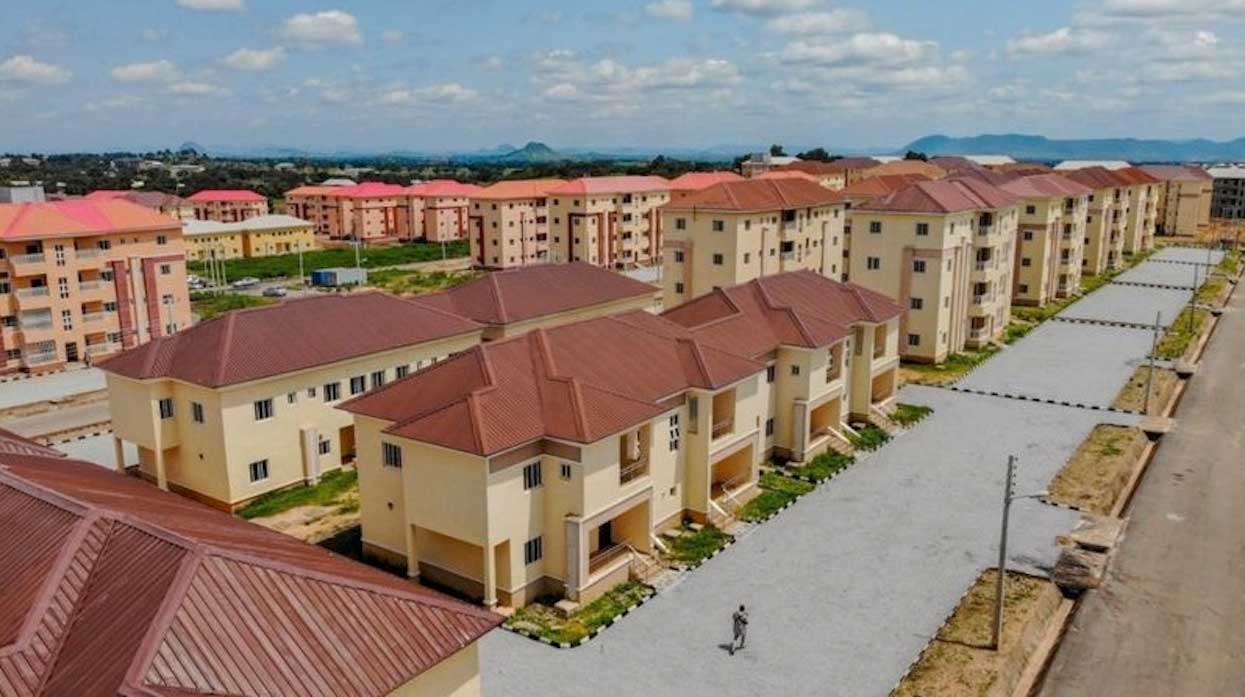
Most analysts look at a housing affordability report from a developing economy and file it under 'local color.' That is a mistake that will cost investors real money. The latest data confirming that low incomes, elevated mortgage rates, and spiraling land costs have pushed homeownership further out of reach for the majority of Nigeria's population is not simply a domestic welfare story. It is a leading indicator for a cascade of second and third-order consequences that touch sovereign debt sustainability, global cement and steel demand, remittance flow dynamics, multilateral development bank lending posture, and the relative attractiveness of African real estate private equity as an asset class. When shelter becomes structurally unaffordable for a working population of over 90 million people, the economic energy that should be compounding into household wealth instead bleeds out through rent extraction, urban overcrowding, and suppressed consumer spending. That is a macro drag that does not stay contained at the border.
The Numbers Underneath the Headline Are More Alarming Than the Headline Itself
Nigeria's housing deficit now sits at approximately 28 million units, a figure that has been cited for years but rarely interrogated for what it actually implies at a financing level. At even the most conservative construction cost estimate of $30,000 per modest unit, closing that deficit requires mobilizing roughly $840 billion in capital, a sum larger than the entire GDP of a country like Switzerland. Against that backdrop, the Central Bank of Nigeria's benchmark lending rate sits above 26 percent following its aggressive tightening cycle, which means that any mortgage product priced off that base rate is functionally inaccessible to any household earning below the formal sector median income. The math does not work at any reasonable debt-to-income ratio.
Land costs compound the problem in a way that mortgage rate discussions often obscure. In Lagos, land in accessible urban corridors has appreciated at an annualized rate exceeding 15 percent in naira terms over the past three years, and because land titling remains fragmented and legally contested across much of the country, developers cannot use land as clean collateral to access cheaper construction financing. That friction inflates the cost of every unit built and pushes developers toward the premium segment where margins are thicker, leaving the affordable housing segment chronically undersupplied. The gap between where supply is being built and where demand actually lives is the core structural fault line.
A housing deficit of 28 million units requiring $840 billion to close, against a sovereign with a 96 percent debt service to revenue ratio and a mortgage market priced above 26 percent, is not a policy challenge. It is a structural capital markets failure with a very long tail.
How a Local Affordability Crisis Becomes a Global Capital Allocation Problem
When homeownership is systemically out of reach, household savings behavior shifts in ways that ripple outward. Families that cannot build equity through property instead hold wealth in physical gold, foreign currency cash, or remittance networks, all of which represent capital that does not recirculate into the domestic financial system. Nigeria received approximately $20 billion in formal remittances in 2023 according to World Bank data, but a significant and growing portion of that inflow is being redirected toward rent rather than productive investment or asset accumulation. That dynamic suppresses the kind of domestic credit creation that would otherwise support consumer lending book growth for local and regional banks.
For international investors, this creates a paradox. African real estate private equity has attracted significant institutional interest over the past decade on the thesis that urbanization and a growing middle class would generate durable demand. Funds like Actis, Grit Real Estate, and various development finance institution-backed vehicles have allocated on that premise. But a housing affordability crisis of this magnitude signals that the middle class formation story is moving more slowly than underwriting models assumed, and that exit multiples on affordable housing plays may compress if the demand pool remains constrained by income and credit access. Repricing of that risk in the private markets will eventually create signal for how listed emerging market real estate investment trusts with African exposure are valued.
The Sovereign Debt and Multilateral Lending Angle Nobody Is Running
Here is the third-order effect that almost every analysis misses. When a government faces a structural housing deficit of this scale, the political pressure to do something visible is intense. The typical response is either subsidized mortgage schemes funded through quasi-sovereign entities, or large-scale public housing construction programs financed through sovereign borrowing or multilateral development bank facilities. Nigeria's Federal Mortgage Bank and the Family Homes Fund already operate in this space, but pressure to expand their mandates and balance sheets will intensify as affordability data deteriorates further. Any expansion of quasi-sovereign housing finance obligations lands on an already stressed sovereign balance sheet. Nigeria's debt service to revenue ratio exceeded 96 percent in 2023, which means there is almost no fiscal headroom to absorb new contingent liabilities without creating rating pressure.
For holders of Nigerian Eurobonds and for those tracking African sovereign credit more broadly, this housing dynamic is a slow-burning credit event. The International Monetary Fund and World Bank will continue to push housing finance reform as a condition of program support, but implementation timelines are long and political economy obstacles are real. The more immediate trade is in how this affordability deterioration affects the credit quality of the micro-finance institutions and housing microfinance banks that serve the lower-income segment. Those entities carry concentrated exposure to a borrower base whose real incomes have been eroded by inflation running above 30 percent year-on-year, and their non-performing loan ratios are a lagging indicator worth watching closely.
Sector and Asset Class Implications Across the Capital Structure
At the commodity level, a structurally undersupplied affordable housing market that cannot access financing is paradoxically bearish for cement and steel demand in the near term, even though the long-run deficit implies enormous latent demand. Companies like Dangote Cement, which commands over 60 percent of Nigerian cement market capacity, have volume growth assumptions baked into their valuations that depend on the formal construction sector expanding. If mortgage credit remains frozen at 26 percent base rates, formal sector construction volumes stay depressed, and those volume assumptions look optimistic. The risk is not a collapse but a sustained period of underperformance relative to capacity utilization targets.
In the global listed space, the more interesting angle is in the development finance and impact investing vehicles that have raised capital specifically against African housing opportunity. Emerging market bond funds with frontier Africa exposure should be stress-testing how a sustained affordability crisis affects the sovereign fiscal path and the underlying consumer credit quality of their financial sector holdings. And for currency traders, the inability to build domestic household wealth through property is one more structural factor keeping naira-denominated savings rates low and sustaining the preference for dollar-denominated stores of value, which adds persistent pressure to the naira through portfolio outflows even when the current account is not the primary driver.
Where Zentra's Delta-Neutral Framework Finds the Edge in This Trade
At Zentra Asset Management, our delta-neutral SPX options approach is explicitly designed to profit from volatility mispricing rather than directional bets. What a macro story like Nigeria's housing crisis offers is not a direct SPX trade but a framework for identifying where correlated volatility is being mispriced in asset classes that will eventually feel the contagion. Emerging market currency volatility, particularly in commodity-linked African currencies, tends to be underpriced during periods when the primary narrative is about central bank rate cycles in developed markets. When a structurally significant economy is dealing with simultaneous fiscal stress, housing affordability collapse, and a currency under pressure, the realized volatility that eventually prints tends to overshoot the implied volatility that options markets embed during the quiet periods.
The practical application is in monitoring the implied volatility surface on ETFs with meaningful frontier and emerging Africa exposure, including instruments tied to South African financial sector stocks that carry indirect exposure to pan-African banking and real estate credit. When those surfaces flatten during risk-on periods, the mispricing creates the entry conditions for volatility positioning that does not require a directional view on whether the situation resolves or deteriorates. The edge is in recognizing that the market is serially underpricing the tail risk embedded in these slow-moving structural crises until they accelerate.
This is how we position at Zentra Asset Management
Delta-neutral strategies that profit from volatility, not direction. See our full track record and research library.
Access Zentra Asset Management →The forward-looking risk is not a single identifiable event but a grinding erosion across multiple interconnected systems. If Nigerian benchmark rates remain elevated through 2025 as the central bank prioritizes naira stability, the mortgage market stays frozen, the housing deficit widens further, and the political pressure on fiscal authorities to act escalates. That sequence increases the probability of a quasi-sovereign housing finance expansion that the sovereign balance sheet cannot cleanly absorb, which in turn creates a binary outcome path for Nigerian Eurobond spreads. Emerging market investors who are currently underweighting this slow-moving crisis because it lacks a single catalyst moment are making the same error they made with Sri Lanka's food import crisis in 2021, which looked like a local problem until it very suddenly did not. The time to price the risk is before the catalyst arrives, not after. At Zentra, we are watching the volatility surface on frontier-linked instruments closely. The window where that risk is still cheap will not stay open indefinitely.