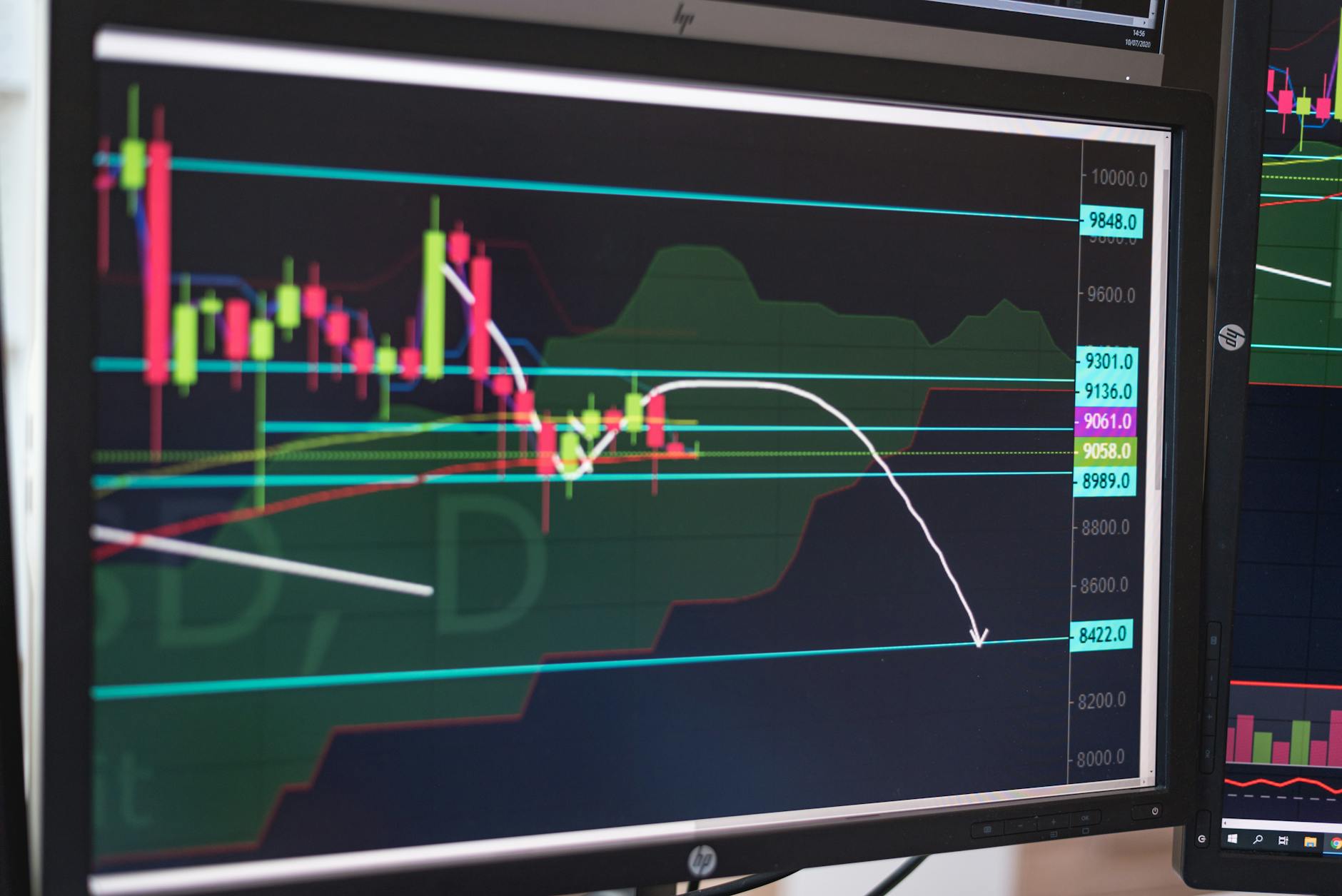
Volatility trading in options is the practice of taking positions that profit from changes in implied volatility rather than from the direction of the underlying asset's price. Instead of betting on whether a stock goes up or down, you are essentially betting on whether the market's expectation of future price swings is too high or too low. It is one of the most nuanced edges available in financial markets, and it is central to how we construct strategies at Zentra Capital.
Why Volatility Is the Real Product in Options Markets
Most retail traders think of options as directional tools. Buy a call, you want the stock to rise. Buy a put, you want it to fall. That framing is incomplete. Every option price is driven by several inputs: the current stock price, the strike price, time to expiration, interest rates, and implied volatility. Of all these, implied volatility (IV) is the only one that is not directly observable. It is derived from the market price of the option itself, and it reflects the collective market expectation of how much the underlying asset will move over the life of the option.
This creates an opportunity. If implied volatility is consistently mispriced relative to how much assets actually move (realised volatility), a disciplined trader can exploit that gap systematically. Research has shown that implied volatility tends to overstate realised volatility over time, which is why selling volatility has historically been a profitable strategy on a risk-adjusted basis. But the risks are real and the mechanics matter enormously.
Implied Volatility vs. Realised Volatility: The Core Distinction
Understanding the difference between implied and realised volatility is the foundation of everything else in this space.
Implied volatility (IV) is forward-looking. It is the market's consensus forecast of how much an asset will move, expressed as an annualised percentage. If a stock is trading at $100 and the at-the-money option implies a volatility of 25%, the market is pricing in approximately a $25 annualised move, or roughly a $1.56 daily move on a one-standard-deviation basis.
Realised volatility (RV), sometimes called historical or statistical volatility, is backward-looking. It measures how much the asset actually moved over a given period, calculated from observed price returns.
The difference between the two, IV minus RV, is often called the volatility risk premium. When IV exceeds RV, options are expensive relative to actual market movement. This premium exists because option sellers demand compensation for taking on the risk of large, sudden moves. Volatility traders attempt to systematically capture this premium while managing the tail risks that come with it.
Core Volatility Trading Strategies
There is no single way to trade volatility. The approach depends on your view of where IV stands relative to what you expect realised volatility to be, and on your capacity to manage the associated risks.
Long Straddles and Strangles
A straddle involves buying both a call and a put at the same strike and expiration. A strangle uses out-of-the-money options on both sides. Both positions are long volatility: you profit if the underlying moves significantly in either direction. This is the right trade when you believe implied volatility is too low relative to what will actually happen, typically before earnings announcements, central bank decisions, or other binary events where the market has underestimated the likely price swing.
The key risk: if the underlying stays quiet, time decay (theta) erodes the value of both legs steadily. Long volatility positions lose money when nothing happens.
Short Straddles and Strangles
The mirror image. Selling a straddle or strangle collects premium upfront and profits if the underlying moves less than implied volatility predicted. This is the trade when IV looks rich relative to expected realised volatility. The volatility risk premium described earlier makes short volatility positions profitable in calm, trending markets.
The risk is significant and asymmetric. A sudden large move, a flash crash, an earnings surprise, a geopolitical shock, can cause losses that far exceed the premium collected. Proper position sizing and defined-risk structures (like iron condors or credit spreads) are essential to managing this.
Iron Condors and Butterfly Spreads
These are defined-risk, short volatility structures. An iron condor combines a short strangle with long options on the outer strikes to cap maximum loss. A butterfly spread profits most when the underlying lands precisely at a central strike at expiration. Both strategies benefit from IV compression and low realised volatility, while the defined-risk structure prevents catastrophic losses. This is where many professional volatility traders spend most of their time, earning consistent, bounded returns while avoiding unlimited downside.
Calendar Spreads and Volatility Skew Trades
Calendar spreads involve buying and selling options at the same strike but different expirations. They exploit differences in the term structure of volatility, the fact that near-term IV and longer-dated IV do not always move in lockstep. Skew trades exploit the fact that put implied volatilities are typically higher than call implied volatilities (the volatility skew), and that this skew varies over time. Trading skew is an advanced approach used primarily by institutional desks.
Delta Neutrality: Isolating Volatility as the Variable
If you simply buy a call option, you have both volatility exposure and directional exposure. A 10% rise in the stock will increase the option's value regardless of what happens to implied volatility. To trade volatility in its pure form, traders use delta hedging to neutralise directional risk.
Delta measures how much an option's price changes for a $1 move in the underlying. If a call has a delta of 0.50, you offset that by shorting 50 shares of the underlying stock per contract. Now your position makes or loses money primarily based on volatility, not on whether the stock moves up or down. This is called a delta-neutral position.
Delta neutrality is not static. As the underlying moves, the delta of your options changes (measured by gamma), requiring ongoing adjustments. The cost of these adjustments, and the frequency with which you make them, is a key variable in the profitability of any volatility trade. This dynamic hedging process is central to how sophisticated volatility desks operate, and it is a core part of how we manage positions at Zentra Capital.
The Greeks You Must Understand
Volatility traders live and breathe the options Greeks. Four of them matter most in this context:
Vega measures sensitivity to changes in implied volatility. Long vega positions gain when IV rises; short vega positions gain when IV falls. Volatility trading is, at its core, the management of vega exposure.
Theta measures time decay, how much value an option loses each day simply due to the passage of time. Short volatility traders collect theta; long volatility traders pay it. The interplay between theta collected and gamma exposure incurred is the fundamental trade-off in options volatility strategies.
Gamma measures how fast delta changes as the underlying moves. Long gamma positions benefit from large moves in the underlying. Short gamma positions suffer from them. Being short gamma (which comes with most short volatility strategies) means you lose money when markets move sharply, regardless of direction.
Delta is managed, not speculated on. In pure volatility trading, delta is neutralised through hedging and monitored continuously to keep the position clean from directional bets.
The most common mistake I see in traders new to options volatility is conflating a view on the stock with a view on its volatility. The two are related but entirely distinct. You can be right about the direction and still lose money if you are wrong about the volatility regime.
Practical Considerations and Risk Management
Volatility trading is not a passive strategy. It requires active monitoring, disciplined position sizing, and a clear framework for when to exit losing trades. A few principles that every volatility trader should internalise:
Position size conservatively. Short volatility positions can experience rapid, large drawdowns during market dislocations. Even if your long-run edge is real, sizing too aggressively can lead to ruin before you get the chance to realise it. Most professionals limit short vega exposure to a fraction of total portfolio risk.
Know your max loss before you enter. Defined-risk structures like iron condors and credit spreads have a known worst-case scenario. Naked short options do not. Knowing your maximum possible loss before entering any trade is non-negotiable.
Diversify across underlyings and expirations. A portfolio of volatility trades across different sectors, asset classes, and time horizons is far more robust than concentrating in a single name or event. Correlation spikes during market stress, but diversification still reduces idiosyncratic risk significantly.
Watch the VIX term structure. The relationship between near-term and longer-dated implied volatility tells you a great deal about the current regime. A steep contango structure (near-term IV much lower than longer-dated IV) is typically favourable for short volatility strategies. An inverted structure signals stress and calls for caution or a shift to long volatility positioning.
Manage around events. Earnings releases, Federal Reserve meetings, and macro data releases all cause IV to spike before the event and collapse afterwards (IV crush). Holding short volatility positions through such events without adjustment is a common source of large, avoidable losses.
This is how we position at Zentra Capital
Delta-neutral strategies that profit from volatility, not direction. See our full track record and research library.
Access Zentra Capital →Is Volatility Trading Right for You?
Volatility trading is genuinely accessible to individual investors who are willing to learn the mechanics properly. You do not need a Bloomberg terminal or an institutional desk to trade iron condors on the S&P 500 or to sell covered strangles on stocks you already own. What you do need is a solid grasp of how implied volatility behaves, a disciplined approach to risk management, and the patience to let statistical edges play out over many trades rather than expecting each individual trade to be profitable.
If you are new to options, start with understanding the VIX and how it relates to option pricing. Move on to paper trading simple single-leg and two-leg structures before committing real capital. Study how IV behaves around earnings and other events. Build your intuition for when the market is pricing in fear that is likely to be overdone, and when quiet markets are masking genuine risk.
The edge in volatility trading comes not from prediction but from discipline: consistently collecting the volatility risk premium in a structured, risk-controlled way, and avoiding the blowups that end careers. That is the framework we have built at Zentra Capital, and it is the framework that every serious volatility trader eventually arrives at.
Frequently Asked Questions
What is the difference between trading volatility and trading options directionally?
Directional options trading involves taking a view on whether the underlying asset will rise or fall. Volatility trading involves taking a view on whether implied volatility is too high or too low relative to how much the asset will actually move. A volatility trader hedges away directional risk through delta neutrality and profits from the mispricing of volatility itself, not from predicting price direction.
What does it mean when someone says they are 'short volatility'?
Being short volatility means you have sold options and benefit when implied volatility decreases or when the underlying asset moves less than the market expected. Short volatility strategies like selling straddles or iron condors collect premium upfront and profit in calm, low-movement markets. The risk is that a sudden large move causes losses that can exceed the premium collected, especially in undefined-risk structures.
What is IV crush and how does it affect volatility traders?
IV crush refers to the sharp drop in implied volatility that typically occurs immediately after a major event such as an earnings release or a Federal Reserve decision. Before such events, IV rises as the market prices in uncertainty. Once the event passes and the uncertainty is resolved, IV collapses rapidly. Short volatility traders benefit from this collapse if they hold positions through the event, but long volatility traders can see substantial losses even if the underlying moves significantly.
Can individual investors trade volatility or is it only for institutions?
Individual investors with options approval on their brokerage account can absolutely trade volatility. Strategies like iron condors, covered strangles, and calendar spreads are available to retail traders on most major platforms. The key requirements are a solid understanding of options Greeks (particularly vega, theta, and gamma), disciplined position sizing, and a risk management framework. The mechanics are learnable, but the discipline is what separates consistent traders from those who blow up.
What is the VIX and why do volatility traders watch it so closely?
The VIX is the CBOE Volatility Index, a real-time measure of 30-day implied volatility on the S&P 500 derived from the prices of S&P 500 options. It is often called the market's fear gauge. Volatility traders watch the VIX because it signals the current implied volatility regime, helps identify whether options are relatively cheap or expensive, and provides context for the term structure of volatility. Extreme VIX readings, both high and low, often represent potential mean-reversion opportunities.
What is the volatility risk premium and can it be relied upon?
The volatility risk premium is the tendency for implied volatility to exceed realised volatility over time. It exists because option sellers demand compensation for taking on the risk of large, unexpected moves. Historically, this premium has been persistent and positive, particularly on S&P 500 options. However, it is not a riskless arbitrage. During market dislocations, realised volatility can dramatically exceed implied volatility, causing severe losses for short volatility strategies. The premium is real but requires careful risk management to exploit sustainably.